
Does your child know the alphabet song but still can’t read a simple word like “cat”?
That’s completely normal. Knowing letter names is the first step. Letter sounds are what actually help a child read.
In this guide, you’ll find all the A to Z phonics sounds with easy example words, how to say each sound correctly, which sounds to teach first, phonics songs, helpful books and 8 fun activities you can do at home in just 15 minutes a day.
From Our Nest: In our classrooms, the children who read early were rarely the ones who knew the most letters. They were the ones who played with sounds every day, at home, in the car, at the dinner table. Phonics works best when it feels like a game.
What Is Phonics? (Meaning for Kids and Parents)
Phonics is a way of teaching children to read by linking letters to the sounds they make.
For example, the letter s is called “ess”, but it makes the sound “sss”, like a snake. When a child knows the sounds c, a and t, they can say them together and read the word cat.
There are three main skills in phonics:
- Knowing sounds: knowing which sound each letter makes.
- Blending: joining sounds together to read a word (c-a-t makes cat).
- Segmenting: breaking a word into sounds to spell it (dog is d-o-g).
Letter Names vs Letter Sounds
This is the most common mix-up we see. Many children learn “A is for apple” with the letter name “ay”. But in the word “apple”, the letter makes a short “a” sound.
When teaching phonics, use sounds first, names later. And keep the sounds short and clean:
- Say “mmm”, not “muh”.
- Say “sss”, not “suh”.
- Say “t” as a quick, short sound, not “tuh”.
Adding “uh” to every sound makes blending harder. “Cuh-a-tuh” doesn’t sound like cat, but “c-a-t” does.
A to Z Phonics Sounds for Kids (With Example Words)
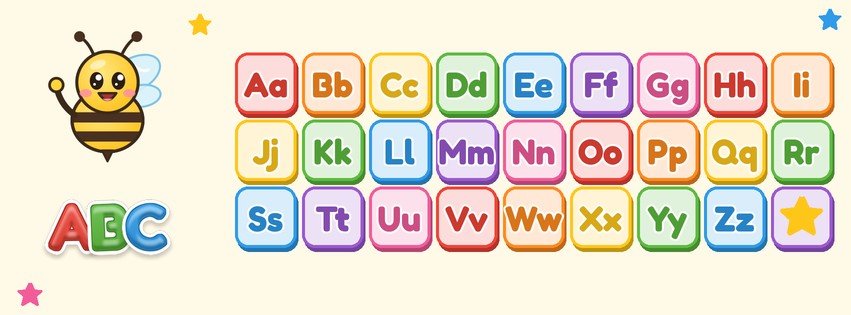
Here is the sound each letter makes, with easy words your child will know. Say the sound, then the words, and let your child repeat after you.
Aa: short “a” as in apple, ant, cat
Bb: “b” as in ball, bat, bus
Cc: “k” as in cat, cup, cap
Dd: “d” as in dog, duck, drum
Ee: short “e” as in egg, elephant, pen
Ff: “fff” as in fish, fan, frog
Gg: “g” as in goat, gift, bag
Hh: a soft breath “h” as in hat, hen, house
Ii: short “i” as in insect, igloo, pin
Jj: “j” as in jam, jug, jelly
Kk: “k” as in kite, king, kitten
Ll: “lll” as in lion, leg, lamp
Mm: “mmm” as in moon, mango, map
Nn: “nnn” as in nest, net, nose
Oo: short “o” as in octopus, ox, pot
Pp: “p” as in pen, pig, pot
Qq: “kw” as in queen, quilt, quack (q is almost always followed by u)
Rr: “rrr” as in rabbit, red, rain
Ss: “sss” as in sun, sock, snake
Tt: “t” as in tap, tiger, top
Uu: short “u” as in umbrella, up, bus
Vv: “vvv” as in van, vest, violin
Ww: “w” as in web, window, watch
Xx: “ks” as in box, fox, six (x usually comes at the end of a word)
Yy: “y” as in yak, yellow, yo-yo
Zz: “zzz” as in zip, zebra, zoo
Teacher’s Tip: The vowels a, e, i, o, u are the trickiest for young children. Use the same picture word every time, like apple, egg, insect, octopus and umbrella, so the sound sticks.
Which Phonics Sounds to Teach First
You don’t need to teach the A to Z sounds in alphabet order. Most schools start with these six sounds, often called SATPIN:
s, a, t, p, i, n
Why these six?
Because with just these letters, your child can already read many real words:
sat, pat, tap, pin, tip, nap, pan, tin, sit, ant, pit, nip
After SATPIN, a common order is:
- m, d, g, o
- c, k, e, u, r
- h, b, f, l
- j, v, w, x, y, z, qu
Teacher’s Tip: Teach the small letters (a, b, c) first. Children see small letters much more often in books than capital letters.
When Should You Start Phonics?
Every child is different, but here is a simple guide:
Ages 2 to 3 Play with sounds only. Rhymes, songs and “I spy something that starts with mmm” games. No pressure to know letters.
Ages 3 to 4 Start with a few letter sounds, one or two a week. Keep it to play.
Ages 4 to 5 Learn most A to Z sounds and start blending simple three-letter words.
Ages 5 to 6 Read short words and simple sentences, and start sounds like sh, ch and th.
If your child is not interested, stop and try again in a few weeks. Pushing too early can make reading feel like a chore.
What Is Jolly Phonics?
Many schools in India use Jolly Phonics, a popular programme that teaches 42 letter sounds in a fun way. Each sound comes with a story, a song and an action. For example, children wiggle their hands like a snake for “s” and pretend to tap a tap for “t”.
You don’t need the Jolly Phonics books to teach phonics at home, but if your child’s school uses them, ask the teacher which sounds and actions they are learning. Practising the same actions at home helps a lot.
How to Teach Phonics at Home: 5 Simple Steps
Step 1: Teach one sound at a time.
Show the letter, say the sound and add an action. For “s”, move your hand like a snake and say “sss”. Actions help children remember.
Step 2: Find the sound everywhere.
Once your child knows a sound, go on a hunt. “What starts with sss in the kitchen?” Spoon, sugar, salt.
Step 3: Blend sounds into words.
Say the sounds slowly, then faster, until they join: “s… a… t… sat!” Start with words that use the sounds your child already knows.
Step 4: Break words into sounds.
Turn it around. Say a word and ask your child for the sounds. “What sounds are in pin?” p-i-n. This helps with spelling later.
Step 5: Read tiny books.
Once your child can blend three-letter words, give them simple phonics readers. Reading a real book, even a tiny one, builds huge confidence.
8 Fun Phonics Activities for Kids
1. I Spy Sounds (Ages 2 to 5)
Say “I spy something that starts with b”. Your child guesses: ball, book, banana. Play it anywhere, even in the car.
2. Sand or Salt Tray Writing (Ages 3 to 5)
Spread salt or sand on a tray. Say a sound and let your child trace the letter with a finger. Shake the tray to start again. Children love the feel of it.
3. Sound Basket (Ages 3 to 5)
Put 6 to 8 small objects in a basket, like a pen, a cup, a toy car and a spoon. Your child sorts them by their first sound.
4. Robot Talk (Ages 4 to 6)
Talk like a robot by breaking words into sounds: “Pass the c-u-p.” Your child guesses the word. Then let them be the robot.
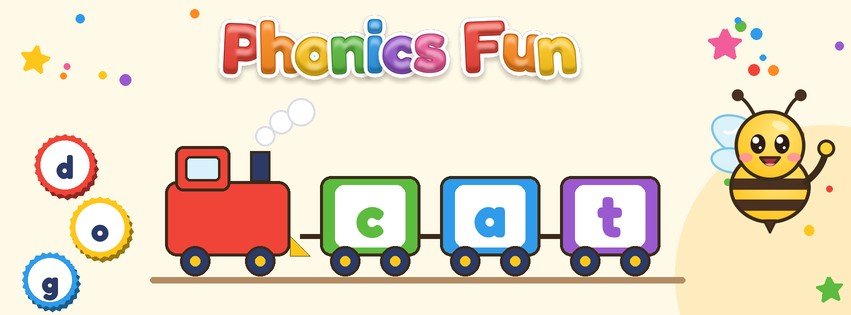
5. Blending Train (Ages 4 to 6)
Write one sound on each of three paper “train carriages”. Your child says each sound, then pushes the carriages together and says the whole word.
6. Word Family Houses (Ages 4 to 6)
Draw a house with “-at” on the roof. Your child adds letters in front to make words that live in the house: cat, hat, mat, bat, sat. Try “-in” and “-op” next.
7. Bottle Cap Words (Ages 5 to 6)
Write letters on old bottle caps. Ask your child to build words like “dog”, “pen” and “sun”, then change one cap to make a new word (dog becomes dot).
8. Sound Bingo (Ages 4 to 6)
Make simple bingo cards with letters. Say a sound, not the letter name, and your child covers the matching letter. Great for siblings or a small group.
Parent Tip: Stick a “sound of the week” on the fridge. Everyone in the family tries to find words with that sound by the weekend.
Make Your Own Phonics Worksheets at Home
You don’t need to print anything fancy. A notebook and a pencil are enough:
- Circle the sound: Write 5 words and ask your child to circle the “s” in each one.
- Match the picture: Draw 4 simple pictures (sun, cat, pen, dog) and write the first letters on the other side. Your child draws lines to match.
- Fill the gap: Write c_t, p_n, d_g and let your child add the missing sound.
- Sound tracing: Write a letter in dots and let your child trace over it while saying the sound.
Teacher’s Tip: Keep worksheets to 5 minutes. Games teach phonics better than paper, so use worksheets only for a little extra practice.
A to Z Phonics Songs for Kids
Songs are one of the easiest ways to learn the A to Z sounds. Children remember a tune much faster than a list. Here is a popular phonics song that says each sound with two easy words:
Play the same song every day for a week. Then pause it and let your child sing the next sound. For one song per letter, try the Jack Hartmann “Let’s Learn About the Alphabet” series, and for blending words, try the BBC show Alphablocks.
A Simple 15-Minute Daily Phonics Routine
Short, daily practice works much better than one long session a week. Here is an easy routine:
- 3 minutes: Sing a phonics song or revise old sounds with flashcards.
- 4 minutes: Learn or practise one new sound with an action.
- 5 minutes: Play one blending or segmenting game.
- 3 minutes: Read a few words or a tiny book together.
Stop while your child is still enjoying it. That way they look forward to tomorrow.
After A to Z: Sounds Made by Two Letters
Once your child knows the single letter sounds, introduce sounds made by two letters together. These are called digraphs.
- sh as in ship, fish
- ch as in chip, chair
- th as in this, thumb
- ck as in duck, sock
- ee as in bee, tree
- oo as in moon, book
Introduce one a week, just like single sounds.
Tricky Words
Some common words can’t be sounded out, like the, to, I, was, said, my, you and are. These are often called tricky words or sight words.
Teach them by sight. Write them on cards, stick them around the house and play a quick “flash and say” game. Learning a few tricky words lets your child read real sentences much sooner.
Common Phonics Mistakes Parents Make
- Adding “uh” to sounds. Keep sounds short: “mmm”, not “muh”.
- Teaching capital letters first. Start with small letters.
- Doing too much at once. One or two new sounds a week is plenty.
- Skipping blending. Knowing sounds is not enough. Practise joining them every day.
- Correcting too much. Praise the effort first, then gently show the right sound.
- Comparing with other children. Every child reads in their own time.
Phonics Books and Things That Help
Phonics Books and Things That Help
You don’t need to buy anything to start, but these make practice more fun:
- Jolly Phonics Pupil Book 1: great if your child’s school uses Jolly Phonics (Ages 3 to 5).
- Jolly Phonics Activity Books: colouring and sticker books for each group of sounds (Ages 3 to 6).
- Oxford Reading Tree Floppy’s Phonics: simple readers that only use sounds your child has learnt (Ages 4 to 6).
- Usborne Phonics Readers: short, funny rhyming stories for first reading (Ages 4 to 6).
- Ladybird Phonics Books: low-cost sets that are easy to find in India (Ages 4 to 6).
- Small-Letter Phonics Flashcards: for quick daily revision (Ages 3 to 5).
- Magnetic Letters: build words on the fridge while you cook (Ages 3 to 6).
A small whiteboard and marker at home also works well for “fill the gap” games.
Signs Your Child Is Ready to Read
- They can tell you the first sound of a word.
- They can hear words that rhyme, like cat and hat.
- They know most of the A to Z letter sounds.
- They can blend three sounds into a word you say slowly.
- They show interest in books, signs and labels.
If your child shows most of these signs, they are ready for simple phonics readers.
Frequently Asked Questions
1. What are A to Z phonics sounds?
They are the sounds each letter of the alphabet makes, like “a” as in apple, “b” as in ball and “c” as in cat. Children use these sounds to read and spell words.
2. What is the meaning of phonics for kids?
Phonics means learning to read by linking letters to their sounds, then blending those sounds into words.
3. At what age should a child start phonics?
Most children are ready to learn letter sounds between 3 and 4 years old. Before that, rhymes and sound games are enough.
4. Which phonics sounds should I teach first?
Start with s, a, t, p, i and n (SATPIN). These six sounds make many simple words like sat, pin and tap.
5. What is the difference between phonics and Jolly Phonics?
Phonics is the method of teaching letter sounds. Jolly Phonics is one popular programme that teaches 42 sounds using stories, songs and actions.
6. What are CVC words?
CVC words are three-letter words made of a consonant, a vowel and a consonant, like cat, dog, sun and pen. They are the first words children learn to blend.
7. How long should phonics practice be each day?
About 10 to 15 minutes a day is enough for young children. Short daily practice works better than long sessions.
A Final Note From Our Nest
Learning to read is one of the biggest moments in a child’s life, and you don’t need to be a teacher to help. A few minutes of sound games every day, lots of praise and plenty of patience are all it takes.
Start small, keep it playful, and celebrate every word your child reads on their own. The first time they point at a word and say it out loud, you’ll both remember it for sure.
Happy reading from all of us at The Kids Learning Nest.